¡Hola! Perhaps you have been studying Spanish for some time now, and you are wondering how good you are at understanding basic conversations. The resources in this lesson will help you evaluate your listening skill with several recordings and interesting interactive exercises for beginners. Let’s start…
Some tips before working on the Spanish listening activities in this lesson
First, practice Spanish by listening to examples…
You may already know that our lessons include many examples with common words for each topic, from basic personal introductions to things like hobbies, eating out, or daily routines. When you learn a foreign language, memorizing words without context isn’t enough to master the language. Instead, you need to try to use grammatical structures and vocabulary in meaningful ways.
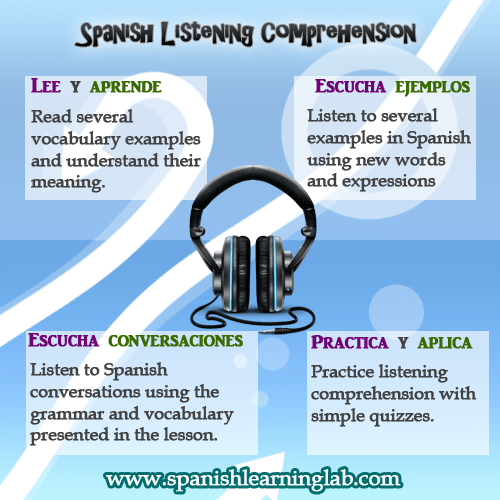
Grammar and listening comprehension in Spanish
Spanish grammar is somewhat complicated, even for native speakers. However, you can learn grammar easily by focusing on small details first, such as verbs, adjectives, and other parts of speech. Knowing the basic structure of sentences and how to use regular and irregular verbs is already a great step toward basic Spanish. It’s important that you learn simple structures, use them to create your own sentences, and listen to them often to internalize this knowledge. With that in mind, it’s time for you to evaluate your listening comprehension in Spanish with the following activities.
Spanish greetings, introductions and farewells
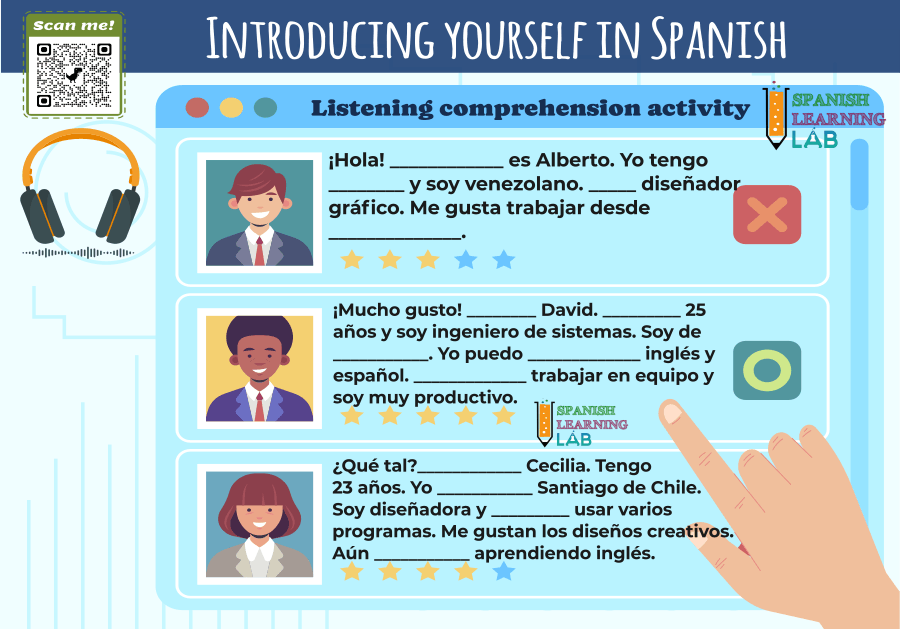
First, we will test if you are able to understand basic introductions in Spanish and common greetings and ways to say goodbye. Getting a grade over 70 points would mean that you do understand these topics at a basic level. Otherwise, check the related Spanish lessons to reinforce your weak areas on the topics. Make sure to check the conversation script once you have solved the listening exercises.
Listening activity No. 1: Key expressions and questions in introductions
Listening activity No. 2: Introducing people, saying hello and goodbye in Spanish
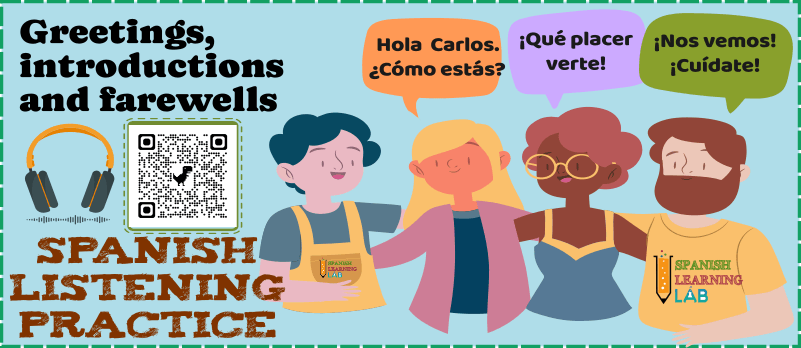
Listening activity No. 3: Basic introductions in Spanish
The Spanish classroom, colors and the location of objects with ESTAR
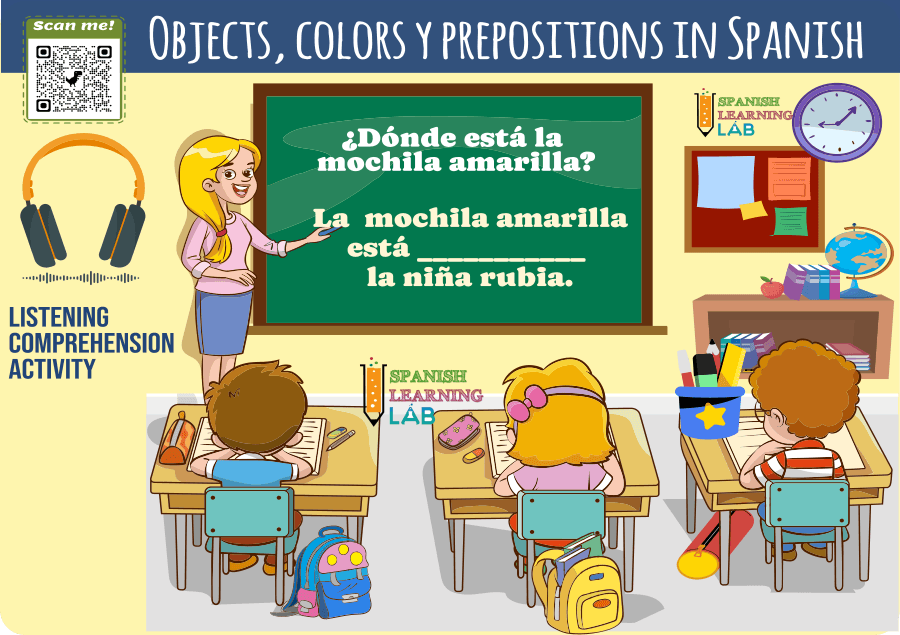
The following listening activities will test your knowledge of the vocabulary for classroom object, prepositions of place and colors, as well as how to use ESTAR to talk about the location of objects. These topics are extremely useful, and you will need this knowledge for more intermediate and advanced lessons. Listen to the recordings and then solve the interactive quizzes about them.
Listening activity No. 4: Questions and answers about things in the Spanish class
Listening activity No. 5: Classroom objects, colors and prepositions in Spanish
Listening activity No. 6: Getting ready for class in Spanish
Asking basic questions and sharing personal information in Spanish
The next listening activities will test if you can share some personal information in Spanish and also if you can actually understand basic conversations in Spanish including things like age, work, family and more. Listen to these recording and then solve the exercises in the interactive quizzes about them. ¡Buena suerte!
Listening activity No. 7: Essential Spanish expressions and questions
Listening activity No. 8: Let’s talk about you in Spanish
Listening activity No. 9: Talking about my family in Spanish
Listen to a man talking about his family in Spanish, the things they have, their ages and more. Then, use the information in the recording to solve the quiz.
Days of the week and months in Spanish
Knowing the vocabulary for days of the week and months of the year in Spanish is also important for beginners. The following listening activity includes the most important questions and expressions about both topics. Listen carefully to solve the interactive quiz about it.
Listening activity No. 10: Spanish days and months
Describing things and people in Spanish
The last Spanish listening practice activity for beginners will test if you can use some basic verbs and adjectives to describe things like rooms and parts of the house, and describe people as well. The exercises in the quiz will not be hard to solve. Click on play when you are ready.
Listening activity No. 11
Closing remarks and advice on Spanish listening practice
Last but not least, if you really understood the previous listening activities (and even more if you found them easy) and got good grades on the quizzes, then we would say that you can understand basic Spanish and therefore are able to understand simple conversations. This also means that you should consider practice speaking in the language with other people, in the classroom or out of it. There are many speaking worksheets and other resources in our site to help you with that.
In order to continue improving your listening ability, we recommend you to listen to music in Spanish, listen to the news and find lessons on topics of your interest. Being able to listen to basic Spanish and understand a little will open the doors for real communication. Keep on practicing and solving listening exercises. It will certainly help you learn new phrases, questions and more. We hope you found the recordings and quizzes useful to practice Spanish listening. Make sure to check more lessons in our site to continue improving this skill too. ¡Hasta pronto!
Related Spanish worksheets:
- Dialogues about the family in Spanish – PDF Worksheet
- Physical Appearance in Spanish – Basic dialogues in PDF
- Essential Phrases and Questions in Spanish – Dialogues in PDF
- Greetings and farewells in Spanish – PDF Worksheet